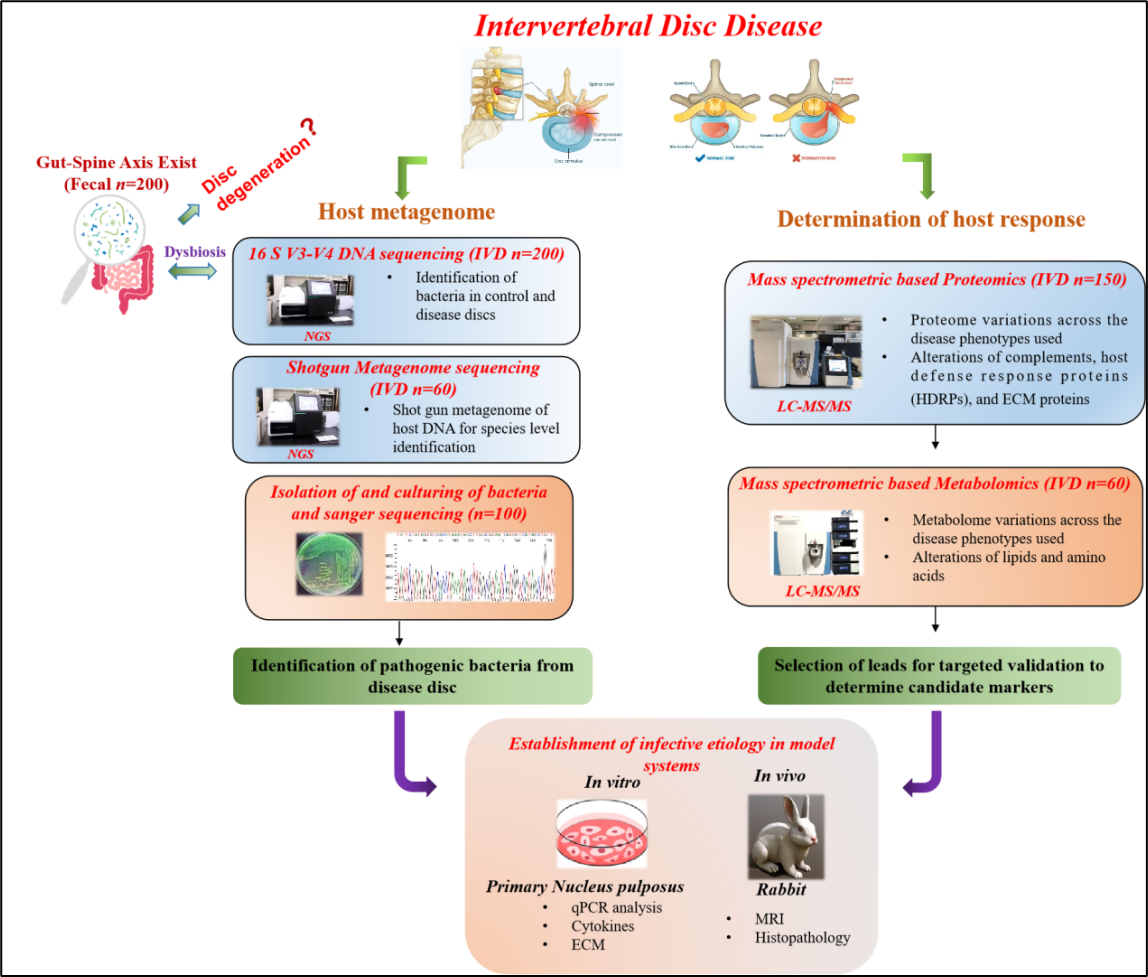
Spine research is a multidisciplinary field focused on understanding, treating, and preventing spinal disorders through advanced science and technology. Healthy spine is imperative to lead a healthy life. Combating various spinal issues at the early stage has a huge impact and possible to reverse back to normal conditions. The "omics" approach has revolutionized spine research by providing a comprehensive, system-level understanding of conditions like spinal cord injury (SCI) and intervertebral disc degeneration (IDD). The term omics refers to the holistic characterization of all genes (genomics), lipids (lipidomics), metabolites (metabolomics) or proteins (proteomics). Low back pain (LBP) is the prevalent cause of musculoskeletal disorder and years lived with disability. Systemic analysis of Global Burden of Disease study 2021 states that 619 million people are affected with LBP and the number will be projected to increase by 843 million by 2050. Intervertebral discs (IVDs) is an essential component of the human spinal cord, crucial for maintaining health and well-being. Disruptions to IVD integrity can lead to a variety of health issues. Low back pain (LBP) is a prevalent non-communicable disease affecting a significant portion of the global population, imposing a substantial economic burden and negatively impacting quality of life. Intervertebral disc degeneration (IVDD) is a major contributor to LBP. Factors such as aging, physical stress, and systemic inflammatory disorders can accelerate IVDD. As this condition often presents asymptomatically, its progression is not well-understood. Current treatment advances from pain management to spinal fusion and spinal arthroplasty yet there is no clinically proven biological therapy for disc complications since there is limited information on the biochemical/molecular changes leading to DDD. Unravelling biochemical/molecular complexity of DDD would lead to early diagnosis and effective treatment of DDD. Our focus relies on improving the knowledge on genetic and molecular basis of intervertebral disc degeneration leading to low back pain (LBP), which with the help of OMICS approach would assist the discovery of biomarkers for the prognostic approach of the disease. OMICS approach aids in documenting the changes at cellular, molecular and biological level to find the ‘true’ initiating factor of disc degeneration. To investigate the potential role of microbial dysbiosis in IVDD, we propose to employ genomics, proteomics, metabolomics approaches, in vivo and in vitro model systems. By studying the microbial community within the disc, GOREF aim to establish a potential infectious etiology of disc degeneration.